Why QSRs Are Struggling to Keep Up With Mobile Order Growth
Mobile orders are now the highest-volume channel for many QSRs, but most weren't built for it. What's breaking down, and how chains like Starbucks and Chipotle are responding.

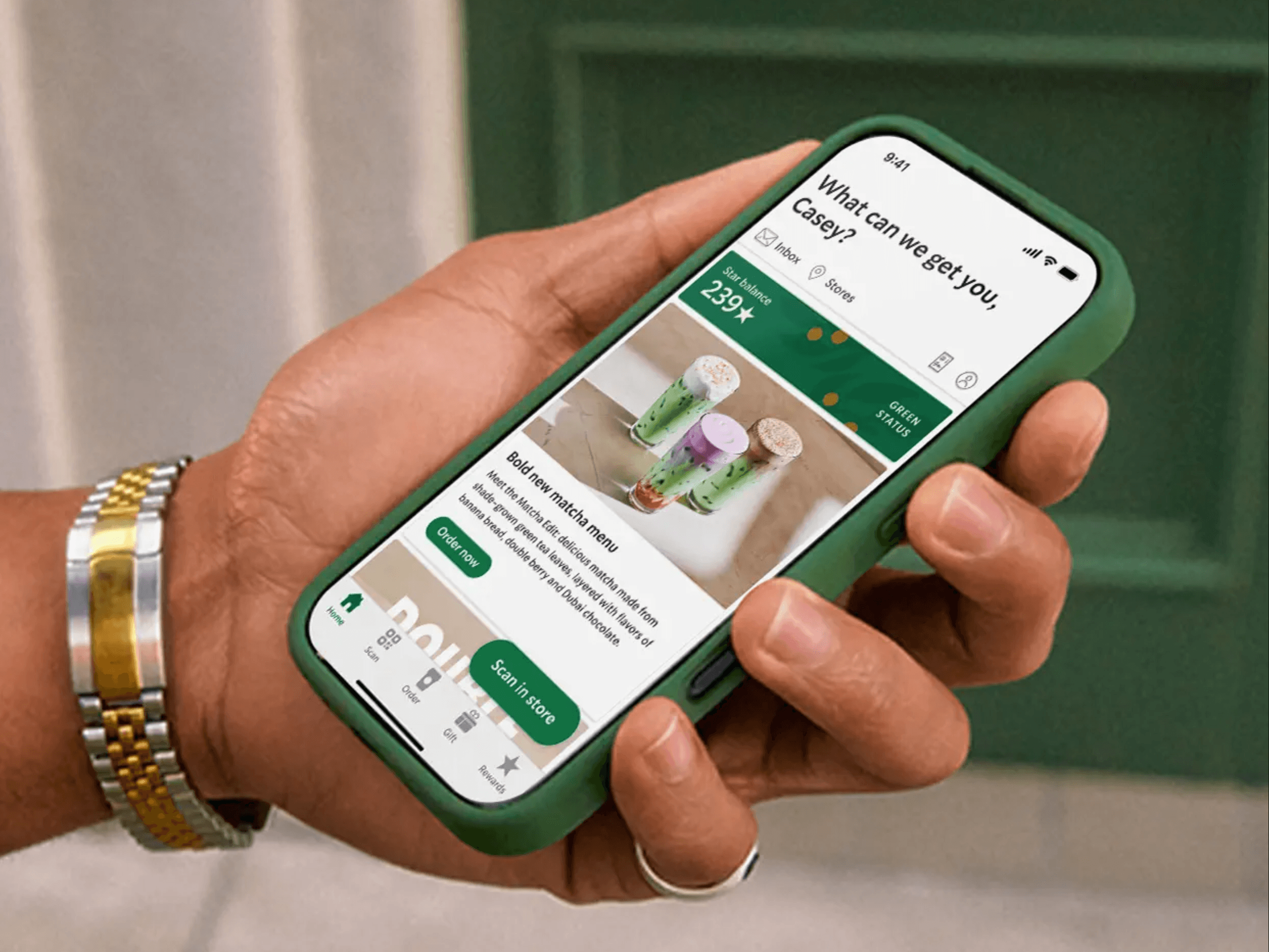
Mobile fast-food ordering has exploded with app orders multiplying nearly fourfold in the past four years.
Customers use apps to place routine orders and breeze through checkout and pickup, all while racking up loyalty points. Customers even place app orders when they’re already at the restaurant to skip the line.
App users now make up a large share of the quick-service restaurant (QSR) customer base, despite brands not quite having figured out how to fit mobile orders into everyday operations.
In our 2026 Restaurant Tech survey of QSR employees, we found that mobile is one of the most difficult order streams to manage. Some QSRs have even started rerouting or deprioritizing mobile orders in the fulfillment chain to repair flagging in-person experiences.
Mobile ordering is here to stay, so brands must make the process more reliable through ensuring technology works consistently to meet customer expectations.
The Trouble with Mobile Orders
Employee feedback helps explain where the strain first shows up. Nearly a third (30%) of QSR employees report mobile order issues weekly or more.
The most common problems involve missing or mistimed orders. Mobile tickets sometimes fail to appear on the POS or [[kitchen display system]], while others show up late or all at once.
When that happens, employees lose visibility into how work should be sequenced alongside in-store and drive-thru demand. As a result, 39% of employees rely on mobile order workarounds, such as re-entering orders or adjusting timing, at least once a week to keep orders moving when something breaks down.
These issues were easier to overlook when QSR apps first launched. Today, mobile is the highest-volume order stream for many brands, and the cracks are beginning to show in the customer experience.
Mobile Order Management Revisited
To date, most mobile-ordering systems have treated app orders like orders from any other channel. When an order is placed, it’s added to the queue to be prepared next.
That approach sounds logical, but it creates several operational challenges.
- Mobile orders are non-stop. Customers can place them from anywhere, often in bursts that the kitchen can’t see forming until the tickets appear.
- Timing is a moving target. In-store customers can’t see how many digital orders are ahead of them, and timing estimates in the app can’t account for lines forming at the counter after an order is placed.
- Different order streams, different expectations. Someone standing at the counter expects food almost immediately, while someone ordering through an app typically anticipates waiting longer before pickup.
As mobile order volume grows, these challenges become harder to manage. Meanwhile, customers retain the flexibility to jump between channels. For example, if the counter gets backed up, customers can shift to ordering on the mobile app. Sequencing work is an ongoing, dynamic problem to solve.
Meanwhile, declining in-store traffic creates a separate concern for QSRs. Chains depend on in-store customers for higher-margin purchases. They also use the in-store environment to offer additional value to customers and differentiate the brand, as is the case with Starbucks.

Starbucks: Reprioritizing Counter Orders
Starbucks has been a leader in mobile ordering. Its 2015 app rollout was a hit, amassing 35.5 million rewards members by 2026.
Throughout this growth, drinks were made on a simple first-ordered, first-made basis. In practice, mobile orders could be made at any moment. As alluded to earlier, a customer waiting in a long line could place a mobile order “in front” of the customers ahead of them in line.
Leadership sees the problem: “The place where we run into problems, frankly, is the fact that there is just no gating on the mobile orders,” Starbucks CEO Brian Niccol told investors last year. Mobile orders “come flooding in faster than even our customers can get there. So, all these drinks are sitting on the counter, and it's at the expense of providing any other experience for a customer that's right in the store.”
In response, Starbucks introduced a four-minute fulfillment target in 2025 and piloted a sequencing algorithm that prioritizes in-store orders. Niccols reasons that counter customers expect drinks quickly, while mobile customers are typically willing to wait longer before pickup.
The tension between in-person and mobile ordering still persists. In one Reddit post, a Starbucks barista described a mobile customer who expected her order to be ready immediately upon arrival. “She wanted it in 6 minutes,” the employee wrote. “Before her order, I had 6 matcha lattes to make.”

Another barista explains the system to customers directly: “I’ve started telling customers, ‘Hey, our system does not prioritize mobile orders. It prints cafe and drive-through orders first, you’re going to start experiencing longer wait times.’”

Whether the sequencing change will bring customers back into stores remains to be seen. Starbucks has also introduced new armchairs and ceramic mugs at select locations to make the in-store experience more appealing.

Chipotle: Expanding Chipotlanes for Quick Pickup
Chipotle has taken a different approach to mobile demand. Rather than changing order sequencing, the company has invested in infrastructure designed to absorb digital traffic.
At the end of 2024, Chipotle Chief Operating and Restaurant Officer Scott Boatwright announced the company would shift its focus to “the total guest experience.” Part of that has meant adjusting to make sure mobile and in-person orders are well-balanced. According to Boatwright, they’re starting to look at the experience “holistically”:
“[We’re] beginning to look at our tools and processes and conventions holistically rather than as bolt-on additions. The end goal is to improve the experience for our teams by making tasks easier to execute, more efficient, faster and more consistent while maintaining our high culinary standards. We are also pursuing long-term innovations through our stage gate process, including Autocado, our device that cuts cores and scoops avocados and our augmented digital makeline, both of which are being evaluated on a test basis. While it is early in our learnings on these opportunities, we are making progress and remain optimistic about each of these innovative tools.
“When we improve the experience for our restaurant teams, it ladders to a better guest experience. exceptional in-restaurant and digital experiences.”
Dedicated drive-thru lanes for mobile pickup, called Chipotlanes, have long been a fixture of the chain. Over the past couple years, the company has opened hundreds of new Chipotlanes to meet growing demand and move mobile orders out the door in about 30 seconds. These lanes are better for the bottom line than standard Chipotle drive-thrus. Boatwright says, “The added convenience has been incremental as Chipotlanes continue to generate better revenues, margins and returns than non-Chipotlanes opened at the same time.”
Chipotle’s [[Digital Makelines]], a dedicated preparation stations for mobile tickets, allow employees to assemble digital orders separately from the counter line. Their experiments with the avocado-coring “Autocado” also offer time-saving efficiency.
Chipotle has introduced other new equipment in some locations to improve throughput, including produce slicers, larger cooking surfaces, and multi-compartment rice cookers and fryers.
Even with those investments, the customer experience does not always meet expectations. On Reddit, Chipotle has become somewhat notorious for “skimping” on mobile orders: This was supposed to be double rice and double black beans with cheese, sour cream and corn salsa,” one customer recently wrote. “There's no reason why a 3rd of the bowl should be empty.”

Another commenter replied: “I [place a mobile order] maybe once a year if I’m short on time,” another customer replied. “Whenever I do, skimp city.”

Mobile Ordering Works When Operations Catch Up
Starbucks and Chipotle illustrate two different ways QSRs are adapting to mobile demand. Starbucks has focused on how orders move through the system, experimenting with sequencing changes so in-store customers are not unknowingly competing with a surge of mobile orders. Chipotle has focused on how orders move through the store, investing in pickup lanes, kitchen equipment, and preparation workflows designed to keep digital demand from overwhelming the counter.
As digital ordering continues to grow, restaurants will likely need a combination of smarter order orchestration, clearer separation between fulfillment channels, and systems that reliably connect apps, POS systems, and kitchen displays. Without that alignment, even well-intentioned mobile strategies can create new friction for employees and customers alike.
A holistic approach to the restaurant supports employees who, in turn, support customers. Boatwright is right: “When we improve the experience for our restaurant teams, it ladders to a better guest experience. exceptional in-restaurant and digital experiences.”
Learn more about what front-line QSR workers say about mobile ordering, and what operators can do to make restaurant tech more reliable.
Get Fast Food Fault Lines
Access the 2026 Restaurant Tech Report instantly, and find out how to run a more reliable restaurant.
Get Fast Food Fault Lines
Access the 2026 Restaurant Tech Report instantly, and find out how to run a more reliable restaurant.



.avif)