What Kroger's In-Store Video Screens Reveal About Connected Retail Trends
Kroger is rolling out in-store video screens through Looma. Here's what the technology stack behind connected retail media actually requires to work at scale.

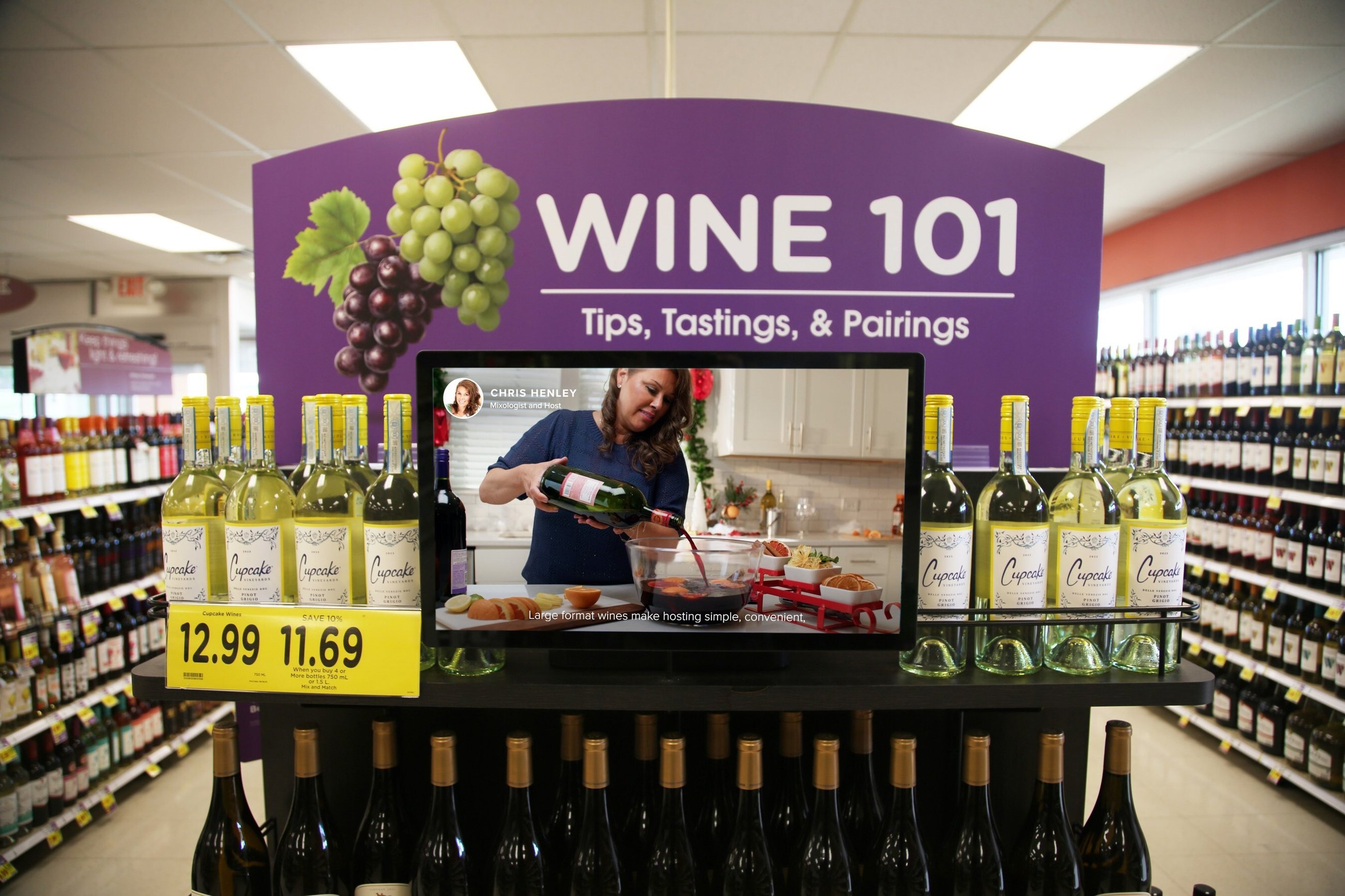
A customer stands in the wine aisle at the grocery store, comparing two bottles. One mentions “tannins,” the other “minerality.” Neither explains which goes with the pasta dish they’re making tonight. Then, the shopper notices a video display mounted nearby. An on-screen sommelier offers a quick explanation of common grape varietals: a cabernet pairs well with rich dishes, while a pinot grigio goes with lighter ones. The decision gets easier.
This is the experience Kroger wants for Looma, an in-store media provider. Kroger is rolling out video screens in 600 wine and spirits departments. Kroger joins BJ’s, Harris Teeter, Lowes Foods, and Schnuck’s in using the technology.
Customers see a simple screen that might help them choose a product. For retailers, that same screen is a window into sales trends at the shelf.
From electronic shelf labels to beverage displays, retailers are adding digital tools across the store to improve the shopping experience and smooth operations. These tools are only effective if customers see their value and if businesses see their ROI. Meeting that bar depends on layers of technologies working together behind the scenes.
Why Grocers Are Rolling Out In-Store Video Screens
For grocery retailers like Kroger, in-store video screens are a way to engage customers at the moment they’re choosing what to buy. A cocktail recipe from an Instagram ad may be forgotten by the time a customer goes shopping, while an in-aisle ad can educate them on how to mix spirits they’re already browsing.
Looma’s approach focuses on content that fits the context. In the meat department, that might mean showing how to prepare a cut, suggesting a marinade, or pairing it with sides a customer can find nearby.
Videos are produced through Relay, Looma’s network of content creators. Advertisers sponsor campaigns, creators develop the videos, and the content runs on screens next to their products.
Performance is measured by linking screen activity to store sales data. The system tracks what content runs on each screen, when it runs, and where that screen sits in the store. Because screens are next to specific products, Looma can compare campaign sales against baseline performance across stores and time periods.
For alcohol brands in Kroger's program, the approach has already translated to a 2x to 4x return on ad spend.
When In-Store Screens Get in the Way
Last time Kroger brought digital screens into the aisle, it didn’t quite land.
In 2023, digital cooler screens replaced glass doors in select Kroger locations. Intended to make inventory updates faster and generate ad revenue, the screens quickly frustrated customers.
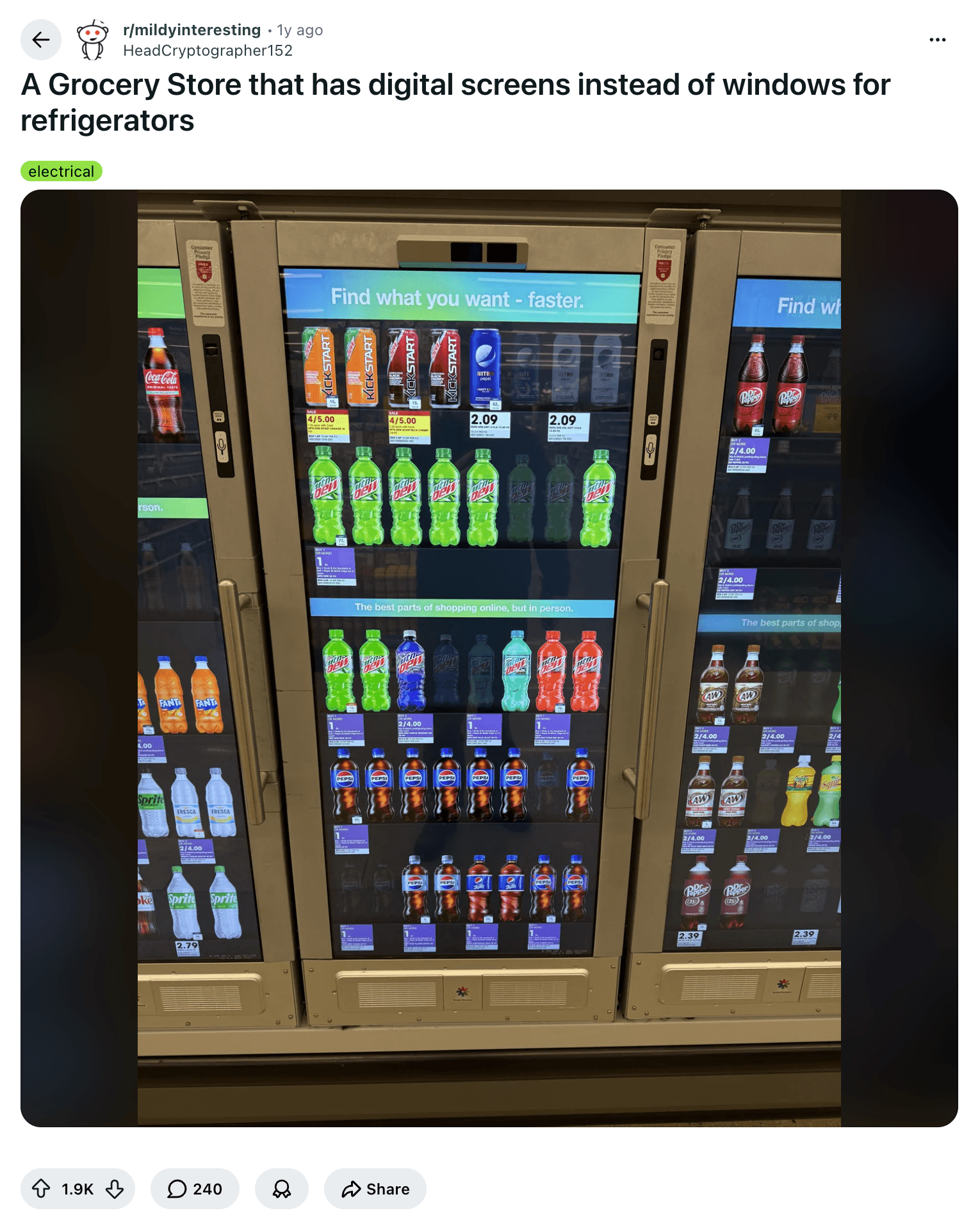
First, the screens’ proposed value add for customers simply didn’t pass muster. “The tagline: ‘Find what you want—faster’ is absurd,” one customer wrote. “Looking in the window vs a pic on the window saves me 4 milliseconds.”

On top of that, ads made it difficult to find products. “It's already hard to find what you're looking for with the stupid digital displays,” another customer said. “It's even harder when half the time the screen is a video ad for Coca-Cola or something else.”
This time, the screens are designed to educate rather than advertise, without changing the way products are displayed.
Whether Kroger gets it right this time comes down to execution, and that starts with the technology behind the screens.

Do you live on the edge of endpoint management?
Discover how global brands and businesses manage their connected product ecosystems. Get the inside-scoop from the hidden architects and teams who ensure their remote devices never go down.
Subscribe to the Canopy Insights newsletter.
Do you live on the edge of endpoint management?
Discover how global brands and businesses manage their connected product ecosystems. Get the inside-scoop from the hidden architects and teams who ensure their remote devices never go down.
Subscribe to the Canopy Insights newsletter.
The Technology Stack Behind In-Store Video Screens
Delivering this experience requires several layers of technology working together.
- In-store hardware: Screens are integrated into fixtures near products, with embedded media players that handle display. Power availability and wiring in the store usually determine where these screens can go and how reliably they run.
- Edge computing layer: Software runs locally on the device to control playback and keep content running when the network slows or drops.
- Central management platform: A CMS controls what content runs, where, and when across all locations. This allows campaigns to scale without relying on store-level execution.
- Data and measurement systems: By linking screen activity to product sales, retailers can see whether content actually changes purchasing behavior.
- Content and recommendation systems: Content is produced for specific categories and shown where it’s relevant, so customers get guidance that matches what they’re looking at.
When one layer fails, the whole experience breaks down. At scale, that becomes a significant operational challenge.
Keeping In-Store Screen Networks Running at Scale
Managing a network of screens across hundreds of grocery stores is harder than it sounds. These systems depend on consistent performance across many devices and locations.
Retailers need to know whether screens are working, whether content is playing correctly, and whether devices are connected. Without centralized monitoring, there's no way to catch problems before customers do. If a screen goes black while a Kroger shopper is following a simple pasta recipe, that customer is unlikely to tune into the screens on their next visit.
They also need to fix problems without sending a technician to every store, including restarting systems, pushing software updates, and resolving issues remotely.
Failures can occur at multiple points in the system, including the device, the network, or the content platform. Detecting and resolving these issues quickly is critical to maintaining both customer experience and campaign performance.
That typically means a tiered support model where store staff handles basic troubleshooting, a centralized operations team manages the network, and vendors step in when the technology itself is the problem.
What Retailers Can Learn From Kroger and Looma’s Approach
Kroger’s use of Looma is part of a bigger shift toward connected stores, where screens, data systems, content platforms, and operational tools work together to deliver value.
Retailers exploring in-store media need to think beyond the display. They need to consider how content will be created, how performance will be measured, and how the system will be maintained over time.
Just as important is staying grounded in the customer experience. Shoppers will accept technology that helps them make decisions and reject technology that slows them down.
Systems like Looma’s can drive measurable results if they are deployed, monitored, and maintained effectively. That is the difference between a screen that adds value and one that becomes another point of friction in the store.
Where In-Store Media Goes Next
Backed by $30 million in financing, Looma’s screens have grown from 800 to 7,000 since 2023. The company says it reaches 27 million customers per month across its 1,100 locations.
To CEO Cole Johnson, this growth is about making in-store ads act as more than just billboards: “The real opportunity to engage shoppers, build brands, and reach the full promise of in-store media is to build digital touchpoints into the heart of the store, on end caps and in the aisles,” he said in a company announcement.
Looking ahead, those digital touchpoints will include more interactive experiences, like Looma’s Digital Sommelier. Now live in select locations, including BJ’s and Harris Teeter, the touchscreen tool recommends wines based on customers’ tastes and dinner plans.
This trend reflects how customers shop in the data age. They expect helpful insights to show up exactly when they need them, and retailers are responding by building that guidance into the aisle.



.avif)