How QuikTrip's Connected C-Store Uses Tech to Deliver Speedy Convenience at Scale
QuikTrip uses connected beverage and kitchen tech, mobile apps, digital menus and robots to support fast convenience, but

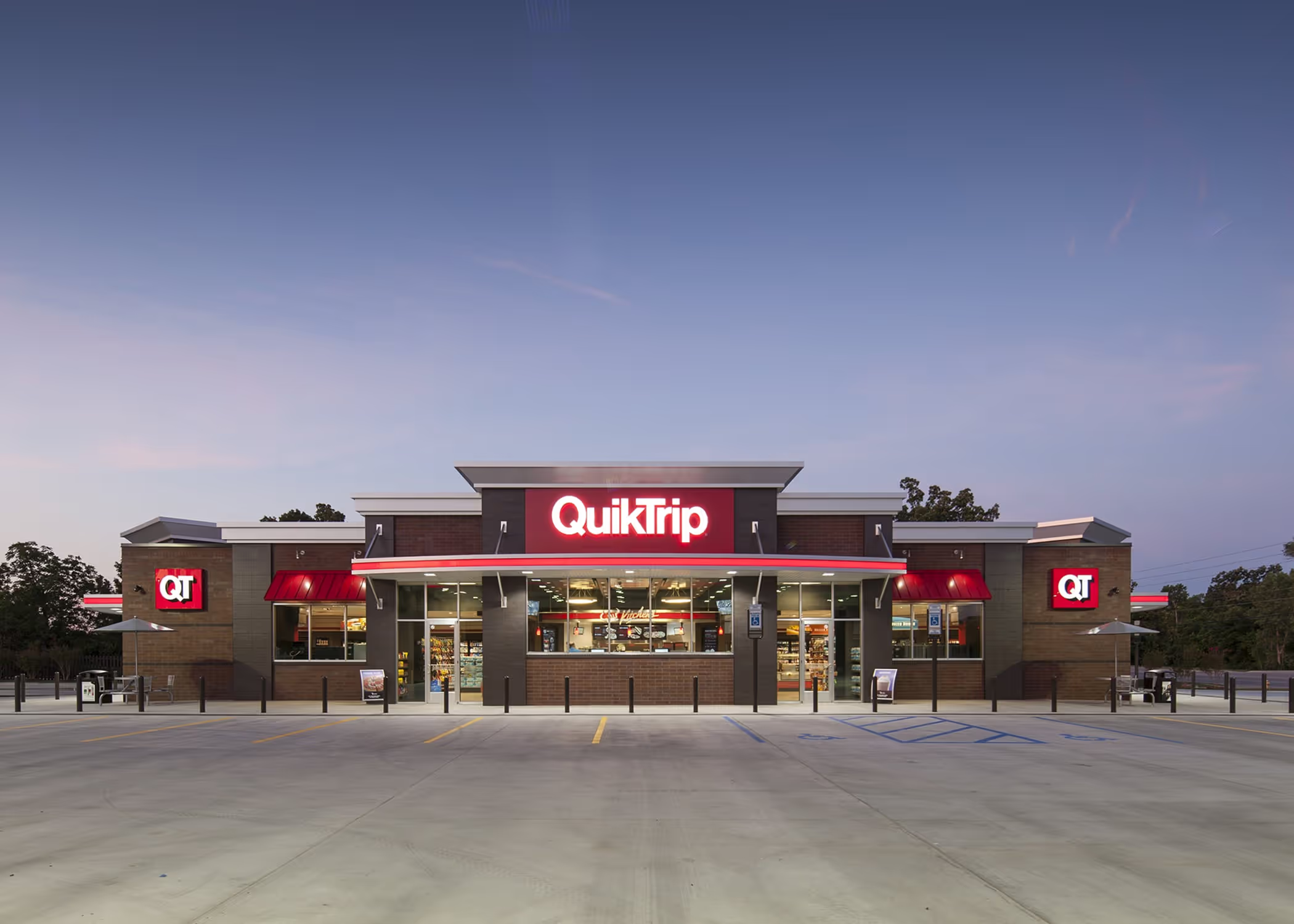
When you walk into a QuikTrip during the morning rush, you’ll find a store as busy as it is controlled. One customer is grabbing coffee, another is mixing a fountain drink, someone else is picking up breakfast, and employees race to support all the activity without slowing down. This kind of flow is deliberate. Along with speed, it’s what QuikTrip has built its reputation on.
Gas aside, the c-store has turned into something closer to a high-volume retail food environment, adding prepared food and beverage choices while aiming for a fast, predictable customer experience across hundreds of locations.
QuikTrip operations depend on a long list of systems working together behind the scenes. Drink equipment, kitchen workflows, digital menus, cleaning robots, and store infrastructure all play a role. QuikTrip is a [[connected c-store]], so if one part of their technology breaks, it can take down other parts of the business with it.
QuikTrip relies on automations and integrations to keep operations running smoothly. This includes replacing manual configuration with repeatable steps and adding downtime checks to shorten the path from “something broke” to “it’s back online.” As the chain’s food and beverage offerings scale, QuikTrip’s sustained investment in infrastructure management keeps the stores running consistently, no matter how busy they get.
Let’s take a closer look at three customer-facing areas supported by this system. These endpoints are designed to give customers as many options as possible without slowing them down, ensuring QuikTrip lives up to the promise built into its name.

Automated, Customizable Drink Systems
Long known for its bevy of drink options, QuikTrip wants to make it as quick and easy as possible for customers to get a coffee, tea, soda, or slushie tuned perfectly to their tastes. A new drink program supported by its connected system aims to drive this experience at speed and scale.
In recent years, the company has rolled out new self-serve beverage equipment across its markets. The changes are designed to give customers more control without slowing the line:
- Fountain drinks designed to reduce traffic jams.
QuikTrip’s touch-screen [[fountain drink system]] lets customers get any drink from any dispenser. Leadership says this breaks up popular drink lines that form during rushes, so customers can get in and out at peak times. - Tea that’s consistent, even when the store is slammed.
The refreshed tea machines are built to brew different types of tea at different temperatures, with options for adjusting sweetness and adding flavors. That takes some of the guesswork out of keeping the product consistent during high-traffic hours. - Frozen drinks machines that offer more combinations in less space.
QuikTrip’s updated frozen drink machines are meant to offer more variety while taking up less footprint. That matters in a chain where stores are busy, layouts vary, and customer flow is a design challenge. - Coffee on tap to speed up specialty drinks.
QuikTrip’s Coffee Wow tap system replaces its previous cappuccino machines and offers 12 choices, including six hot options and six cold options in a range of flavors. While customized coffee orders often become a source of congestion at shops like Starbucks, QuikTrip’s system makes it quick to grab a specialty drink.
The common thread here is automation that supports choice at high speed. Offering more variety at high volumes means relying on systems that keep everything working predictably. And to be sure, QuikTrip’s drink program does have its bad days. Some employees say the coffee machines break so often they need a better way to contact support: “Someone needs to make an app that reports broken coffee machines like the one for McDonald's ice cream,” one employee wrote on Reddit:

Customers have noticed the outages too. Among other concerns about quality and taste, one patron wrote of the coffee taps: “Another thing I've noticed is that they're ALWAYS out of order, like multiple days a week in every store.”

With QuikTrip’s volume of business, even a single machine outage can ripple into extra work for store teams and empty cups for customers. The more choice the drink system offers, the more important it becomes to keep these devices monitored, supported, and running consistently from store to store.
Fresh Food and Kitchen Production Systems
With [[QT Kitchens]], QuikTrip has adopted a focus on made-to-order food items, closer to a fast-food restaurant than your typical grab-and-go gas station offerings.
QuikTrip now builds stores specifically to support the fresh-food program. Its new GEN4 store design includes a kitchen that’s twice the size of a standard location and a dedicated area for quick pickup, built around higher-volume food production. The chain has added high-speed ovens to support made-to-order output, along with holding equipment to keep grab-and-go products ready without sacrificing quality.
As the food program grows, keeping it consistent across hundreds of stores becomes less about individual employee judgment and more about systems. For QuikTrip to manage its volume, a kitchen must operate as a set of connected stations. It needs shared signals, predictable timing, and a way to keep production aligned with real-world demand. That means tools working in the background, including:
- Order flow systems that send made-to-order items from the point of sale into the kitchen, so employees can act without relying on verbal handoffs or handwritten notes.
- Production and timing screens that help teams track what’s due next and what needs to be staged, especially during rush periods.
- Standard cook programs for ovens and hot holding, so the same item comes out the same way at different stores, even when different employees are on shift.
- Health and status monitoring so support teams can quickly identify equipment failures, connectivity issues, or configuration problems.
Reliability matters, because even small issues can interrupt a kitchen shift. And even with the right systems in place, stores run into moments where one piece falls behind or stops responding. At a loss to troubleshoot, one QuikTrip employee took to Reddit when a kitchen display system froze: “It got all messed up and we couldn’t clear this order all day.”

Another employee chimed in to empathize, showing it’s not a rare event: “happens at least once a week at my store somehow:”

A single screen glitch or system freeze can turn into a major interruption. Orders pile up, employees lose time working around stuck tickets, and the kitchen slow-down trickles out the rest of the store. When fresh food is a core part of the experience, keeping kitchen systems stable becomes part of protecting speed and service during the busiest hours.
In-Store Menus, Pricing, and Promotions
Digital menus at QuikTrip set expectations. They tell customers what’s available right now, what’s new, and what the day’s best deals are.
QuikTrip often uses digital menus to display seasonal items and limited-time offers. The customer experience depends on timely, accurate updates getting pushed to these menus. The operational challenge is making sure those offers land correctly across locations:
- Customers notice mismatches instantly. If signage says one thing and the register rings up another, the line slows down, and the interaction gets awkward.
- Store teams have little time to re-tag everything. At the chain scale, updates have to be centrally defined and reliably distributed, whether they’re going to digital boards, in-store systems, or app-based offers.
- Promotions depend on availability signals. It’s hard to promote a drink add-in or a food bundle if stores are unable to keep the underlying product stocked, configured, and visible in the customer-facing flow.
Digital menus are the customer-facing layer between the front of house and back of house. Behind them are systems that need to stay synchronized: product configuration, pricing rules, and store-level execution. If they slip out of alignment, the customer experience takes a hit.
Autonomous Cleaning Robots
QuikTrip’s connected c-stores are high-traffic spaces, so upkeep is a big part of what makes them feel like more than just gas stations. No one wants to get breakfast and coffee from a place with dirty floors.
In some locations, the chain has started using the Pudu CC1 / CC1 Pro floor-cleaning robot (affectionately called “Pringle” or, at one location, “Scrubecca”) to stay on top of routine scrubbing. Robots like this are typically managed via software that tracks status and cleaning activity, which makes them another connected endpoint operating on the store floor.
That connectivity supports consistency across QuikTrip locations. Store teams can rely on the robot to cover key areas on a predictable schedule, and support teams can monitor whether it’s running as intended.
The tradeoff is that connected devices bring their own edge cases. One QuikTrip employee described customers treating the robot like it’s interactive: “The robot cannot hear you…It has one preprogrammed voice line that it repeats on loop but that doesn’t mean it’s capable of conversation.”
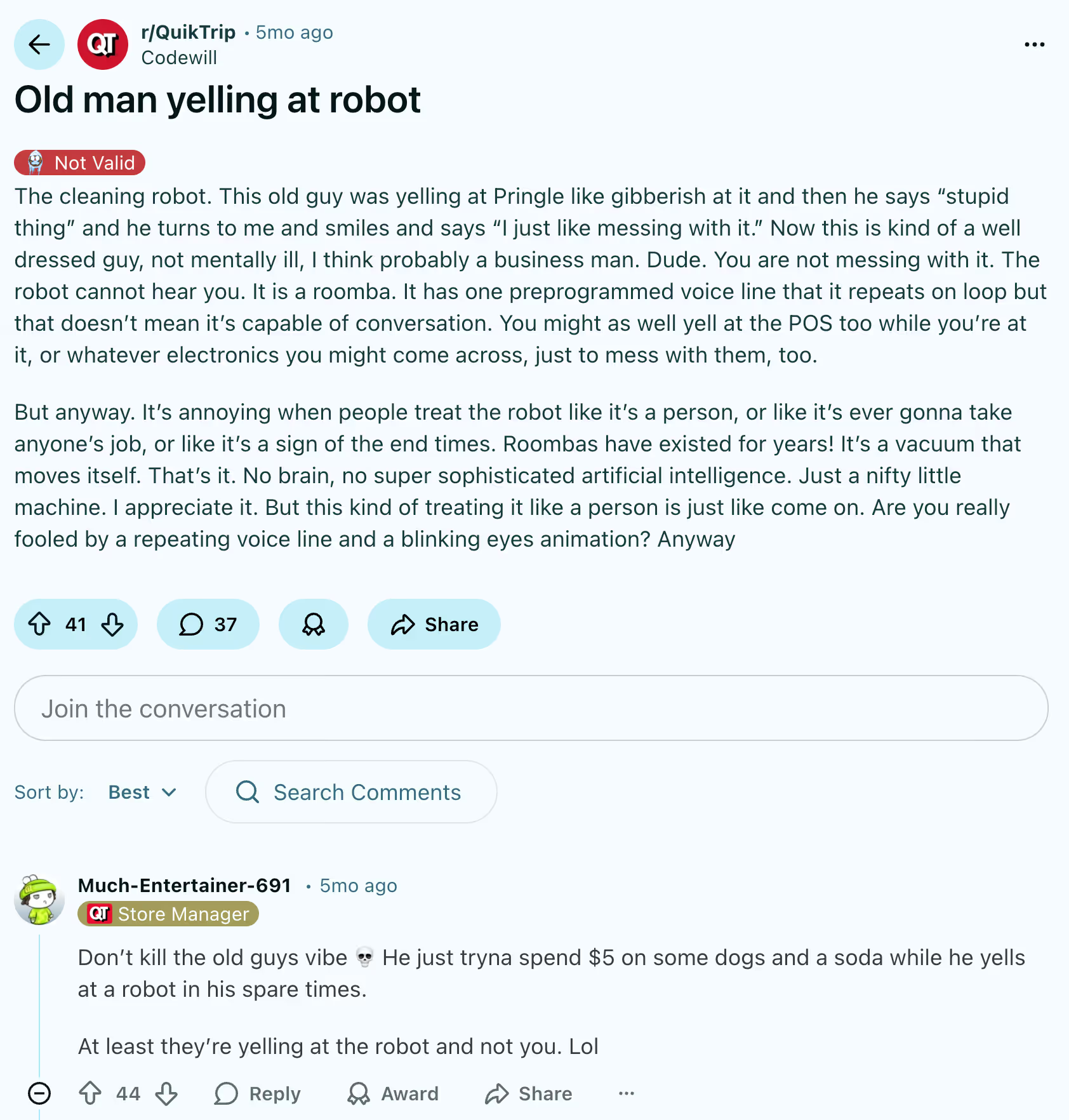
And like any autonomous machine navigating a crowded store, the robot can end up paused mid-route or in the way during rush periods, creating one more moment that employees have to manage. Overall, it fits the same pattern as QuikTrip’s drink and food technology: connected devices can take on more of the routine work in a store, as long as they stay reliable across locations.
Get Powering the Pit Stop
Get the 2026 C-Store Tech Report instantly, and find out how customers rank convenience stores for hot food and tech.
Get Powering the Pit Stop
Get the 2026 C-Store Tech Report instantly, and find out how customers rank convenience stores for hot food and tech.
What It Takes to Keep a Connected C-Store Running
Connected c-store equipment pays off if it behaves consistently from one location to the next. That’s the hard part of scaling programs like QuikTrip’s updated beverage stations and the tech that supports its growing food operation.
QuikTrip has worked with Network to Code to automate parts of its store infrastructure, helping it roll out changes consistently, identify issues faster, and resolve problems before customers notice.
Those goals map directly to the customer-facing systems:
- Drink stations stay usable when updates and configurations are consistent across stores.
- Kitchen operations stay on pace when store systems support predictable execution during rush periods.
- Menus, pricing, and promotions hold up when store tech stays aligned with what customers see on screens and signage.
- Cleaning robots stay on task when they’re monitored and supported across stores.
This system gives QuikTrip the ability to keep hundreds of locations operating on the same playbook, even as the chain adds more connected equipment and more ways for customers to customize their visit.

Keeping Choice Fast
QuikTrip’s customer experience is built for speed that leaves room for preference. The beverage rollout adds more ways for customers to customize drinks, and the GEN4 store model shows the company planning around a food program that keeps growing.
What makes those moves viable across a large chain is the connected system that keeps devices aligned. The less time store teams spend troubleshooting equipment, the more time they can focus on the work customers actually notice. And the smoother the experience for customers, the more likely they are to come back.



.avif)