What QSR Employees Report About Restaurant Tech Problems
72% of QSR employees report recurring drive-thru tech failures. 47% use workarounds weekly. What McDonald's workers say about restaurant tech problems.

How Tech Slows the Shift
Burger King, McDonald’s, Chick-fil-A, KFC, Taco Bell … all these restaurants depend upon a network of hardware, (often proprietary) software, and hopefully, integrated systems. Every quick-service restaurant (QSR) has a different mix of tech, but the requirements have a lot in common. Orders must move from kiosk to kitchen display to payment terminal in seconds (or instantly). Small failures can lead to big service disruptions.
The 2026 Restaurant Tech Report: Fast Food Fault Lines examines these disruptions from the perspective of frontline restaurant employees. The findings draw on a national survey of 500+ QSR workers across major brands like McDonald’s, Chick-fil-A, Domino's, Dunkin’, Panera, and more.
The data shows that technology interruptions are routine inside QSRs. For example:
- Nearly 1 in 5 employees stop what they are doing at least once a week to address a system issue, and
- 57% encounter technology problems several times a month.
Any interruption, whether it involves rebooting a system or helping a customer at a kiosk, disrupts the operating model that has little room for error. Employees respond to misbehaving technology with time-consuming troubleshooting, clever workarounds, and manual fixes to keep orders moving. For operators, these fixes more often than not occur outside the system of record. What goes unmeasured goes unmanaged, and over time, these problems lead to employee burnout and turnover in an industry where median tenure is already short. They also tarnish the reputation of the restaurant. With 80% of customers saying that technology influences their decision about where to eat (See The 2025 Restaurant Tech Report), the long-term damage is lost customers, maybe for good.
Findings from the 2026 Restaurant Tech report are supported by comments (and anecdotes) from McDonald’s employees, who made up the largest group of survey respondents.
Get Fast Food Fault Lines
Access the 2026 Restaurant Tech Report instantly, and find out how to run a more reliable restaurant.
Get Fast Food Fault Lines
Access the 2026 Restaurant Tech Report instantly, and find out how to run a more reliable restaurant.
QSR Tech Failures Hit the Kitchen Display System
In Canopy’s report, 31% of employees say they pause their regular duties at least weekly to deal with technology issues, while 47% rely on workarounds at least once a week, such as re-entering orders or relaying information between stations.
One example is the kitchen display system (KDS). KDS seem to be a common source of interruptions for McDonald’s employees. When one employee posted about a KDS screen stuck on duplicate orders, others chimed in: “This happens daily at my store. So daily that we have a ‘reset fries’ button to clear the screen.”

Should a malfunctioning KDS screen display duplicate tickets or completed orders that never clear, staff struggle to tell what’s actually in the queue. An employee has to step away to reboot the system while others must coordinate verbally to keep orders on track and accurate.
QSR employees say that rebooting takes time too. In a different post about a frozen KDS screen, a commenter says it “takes about 10 minutes to fully reboot.” With three-minute order targets, a ten minute KDS delay is a big deal.

Drive-thrus Break Down Most
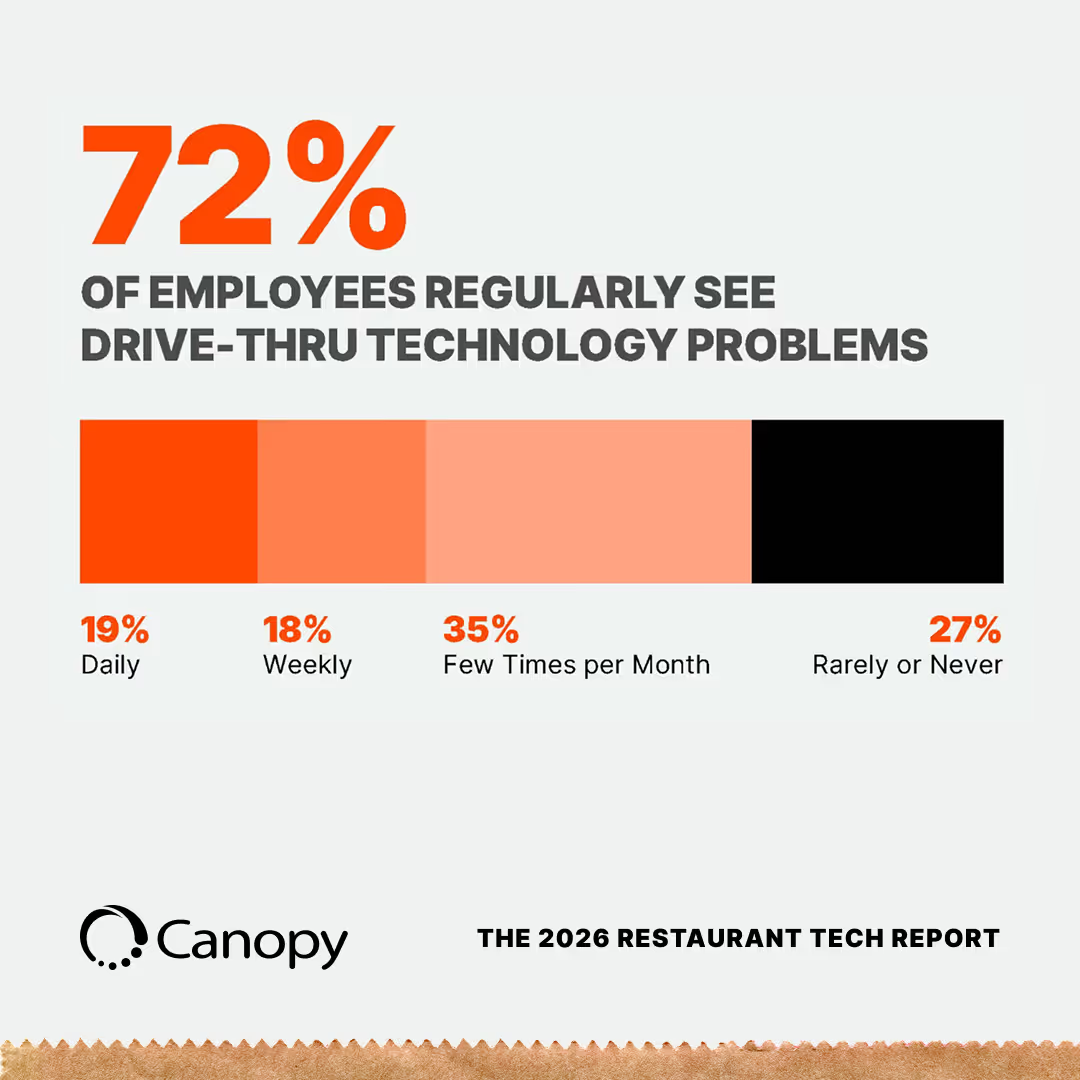
Canopy’s research found that nearly three-quarters (72%) of employees report recurring drive-thru technology problems, with 19% experiencing them daily.
The nature of the drive-thru line compounds errors. Orders move in a fixed sequence, and once cars enter the line, there is limited ability to reroute or recover. When systems fail, customers notice and employees are left scrambling.
Survey respondents identified card reader and POS failure among the most common drive-thru issues. Employees online back up the research. For example, one described how a card reader outage left staff with a pile of delayed and canceled orders: “I have to explain to every customer that we’re only taking cash in the drive thru. Very annoying. To make things worse, the guy taking orders for lane 1 keeps forgetting to say that we’re only taking cash so I’ve had to have my manager [override] like 10 orders since I started.”

Another shared how they had to simultaneously troubleshoot and juggle orders when a cash drawer broke mid-shift: “We had to fully take it off of its hinges and take it all out and restart. So [the manager] is trying to reconstruct a whole till whilst I’m profusely apologising to the woman at the window whilst also taking orders from the lanes.”

The downstream effect of drive-thru issues is slower throughput, increased labor strain, and lost revenue, but all these problems are difficult to trace back to its source. Tech problems in the drive-thru can become chronic and still invisible to operators (who have the power to fix them).
Kiosks … Great So Long as They Work
Self-service kiosks are designed to offload order-taking at the counter. However, Canopy’s report shows how often employees get pulled back into the ordering process. 81% of employees say they regularly assist customers with kiosks, and 56% do so daily or weekly. The most common issues include unresponsive touchscreens and payment failures.

On the floor, that means stepping away from assigned stations to troubleshoot orders the kiosk was meant to handle independently. According to one employee, kiosk issues became frequent enough for their location to assign a “digital ambassador” to help kiosk customers:

Troubleshooting kiosk issues takes time and know-how, neither of which employees may have. When an employee posted a video demonstrating how to reboot a frozen kiosk, others responded that they had never seen the process before, suggesting that the solution can depend on who happens to be working that shift. “This is some wizardry level sh*t,” one wrote.
Time spent troubleshooting kiosks is time takes time away from serving customers. When restaurant employees leave their stations to fix front-of-house issues, productivity drops and stress rises.

Mobile Orders Present Coordination Problems
Mobile ordering adds convenience for customers and complexity for staff. Almost one in three (30%) employees encounter mobile ordering issues at least weekly. Missing orders are a top issue, with 39% of employees using manual workarounds, like re-entering orders or writing them by hand, every week.
One reason for this is routing error. Employees report drive-thru orders getting sent to the front counter and vice-versa, interrupting workflows and forcing staff to use manual fixes to keep customers satisfied.

Promo codes are another culprit. “Half the time they don’t come through on our systems,” wrote one employee. “When I’m typing in the code it will just delete itself for some reason, and when I ask people to refresh their code it gives them a 15 minute waiting period sometimes.” Clearly employees become the punching bag of mobile app problems:
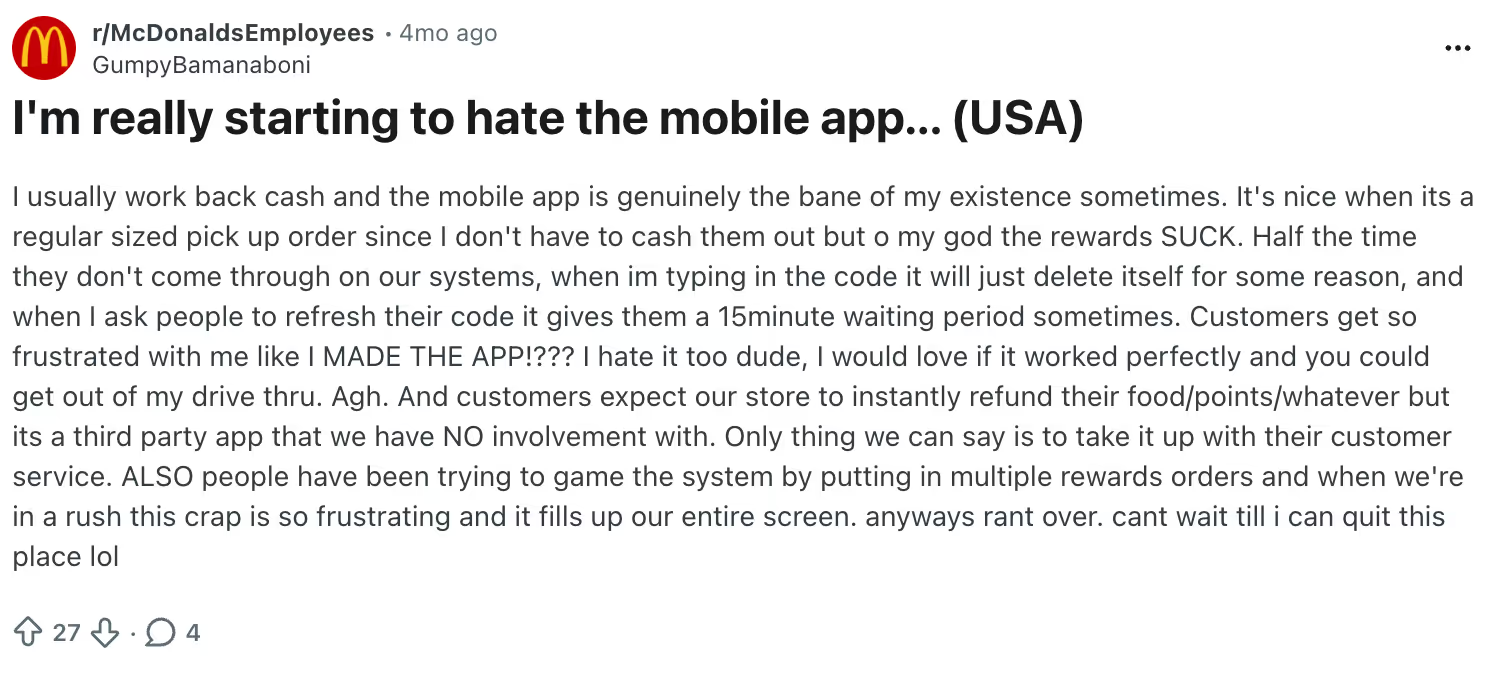
When mobile orders go missing, staff lose time, and refunds eat into margins. At the same time, those workarounds distort the data operators rely on to plan labor and forecast demand.
The Compounding Effect of QSR Tech Breakdowns
A frozen screen here, a missing mobile order there. The Restaurant Tech research shows how these little interruptions add up to operational drag:
- Slower service and increased employee strain. Reboots, re-entered orders, payment explanations, and routing fixes add steps to workflows built for speed. Service times stretch, especially during peak periods, and employees spend more of their shift troubleshooting.
- Greater reliance on experienced employees to absorb system failures. Veteran staff through either training or trial-and-error become the ones who know how to reset devices, override tickets, or manually reconcile orders. They become the unofficial safety net for recurring issues, which concentrates operational risk in a small group of people.
- When turnover occurs, system fragility becomes more visible. The restaurant industry is known for its short median tenure. Losing experienced employees exposes how much day-to-day stability depended on their informal knowledge. New hires must learn on-the-job complicated workflows as well as workarounds.
- Manual workarounds bypass systems of record. Re-entered orders, handwritten notes, and off-system adjustments keep service moving. But they also distort what’s happening, hiding problems that would be better fixed across restaurants. Over time, that weakens decision-making at the store and corporate level.
What begins as small device-level interruptions ultimately affects service speed, employee retention, and the accuracy of the data operators rely on to run the business.
Get additional details and findings by downloading Fast Food Fault Lines, Canopy’s Restaurant Tech report, and learn more about how QSR tech breakdowns affect employees (plus what it takes to run a reliable restaurant).



.avif)